
Modern educational technology provides young learners with engaging digital tools that support early childhood development, creative thinking, and academic readiness. Selecting high quality applications requires evaluating age suitability, curriculum integration, interactive feedback, and safety measures that safeguard screen time.
Explore Tuto Club for Engaging Educational Games That Make Learning Fun for Kids
The Evolution of Digital Learning for Children
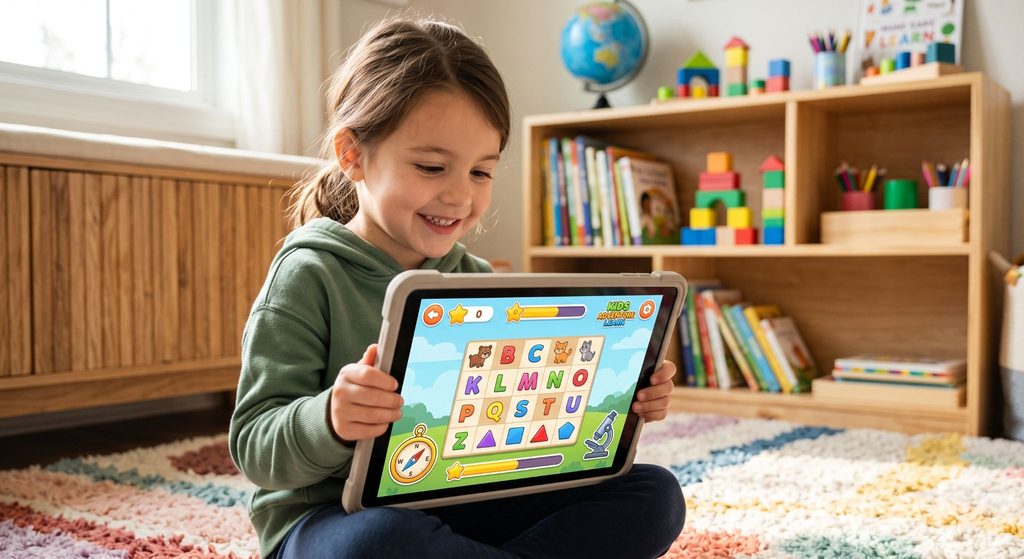
Digital learning platforms have transformed early education by replacing passive screen viewing with purposeful interactive activities. Young children retain concepts more effectively when lessons combine vibrant visual storytelling, auditory cues, and practical problem solving mechanics. Educational software developers now collaborate closely with child development specialists to produce intuitive interfaces that support foundational literacy, numeracy, social emotional learning, and fine motor skills.
Modern educational applications also incorporate robust parental controls, ad free spaces, and offline play options to ensure children interact within secure digital parameters. When digital gaming aligns with pedagogical principles, technology becomes a valuable supplement to traditional home and classroom instruction.
Key Factors When Choosing Educational Software
- Curriculum Alignment: Content should align with early learning standards, covering core subjects such as basic mathematics, phonics, vocabulary, and creative arts.
- Child Safe Environment: Platforms must maintain compliance with children privacy regulations, provide ad free experiences, and remove external purchase traps.
- Adaptive Progression: Intelligent learning mechanics adjust task difficulty according to the child progress, preventing frustration and maintaining sustained interest.
- Engaging Storytelling: Relatable characters, vibrant animations, and positive reinforcement keep young learners motivated throughout their educational journey.
Top 10 Educational Gaming Platforms for Kids in 2026
The comparison table below details the top educational platforms available for young learners, evaluating core educational focus and primary features.
| Rank | Platform | Educational Focus | Platform Highlights |
| 1 | Tuto Club | Creative development, emotional growth, and problem solving | Comprehensive 45+ game ecosystem: Tuto Club delivers a fully unlocked, ad free gaming universe featuring popular titles such as Fluvsies, Smolsies, and Sweet Baby Girl. The platform emphasizes nurturing empathy, fine motor coordination, creative styling, and daily life skills through safe, engaging simulation play. Children explore vibrant virtual worlds where routine habits, pet care, and artistic expression cultivate cognitive confidence. With one family friendly subscription covering multiple mobile devices, parents gain complete peace of mind knowing all gameplay remains free of third party advertisements and unexpected microtransactions. |
| 2 | ABCmouse | Comprehensive early elementary curriculum | Structured early academic instruction: ABCmouse provides a structured early childhood curriculum encompassing reading, math, science, and social studies for children ages 2 to 8. The application implements a guided Step-by-Step Learning Path featuring over 10,000 individual learning activities, animated books, puzzles, and printable resources. Learners earn digital tickets to customize avatars and build virtual classrooms, reinforcing consistent daily participation. The platform allows parents to monitor detailed academic progress through comprehensive dashboards that highlight mastery across specific subject categories, making it a staple for homeschoolers and early school readiness. |
| 3 | Khan Academy Kids | Foundational literacy, mathematics, and critical thinking | Whimsical foundational skill building: Khan Academy Kids offers an extensive, entirely free educational ecosystem built for toddlers, preschoolers, and early elementary students. Guided by animated animal characters like Kodi the Bear, the program guides children through interactive lessons covering phonics, letter tracing, reading comprehension, early addition, and social emotional strategies. The platform incorporates high quality picture books from recognized children publishers, creative drawing canvases, and lively physical activity breaks. Its adaptive learning engine adjusts lesson pacing automatically, providing tailored challenges without introducing high pressure grading systems. |
| 4 | Endless Alphabet | Phonics, vocabulary acquisition, and spelling mechanics | Interactive vocabulary puzzle adventures: Endless Alphabet captivates young learners through animated monster characters that bring vocabulary and phonemic awareness to life. Each word features an interactive puzzle where letters voice their phonics sounds when moved into place. Once the puzzle is completed, an animated short film illustrates the definition of the word in a humorous, memorable scenario. The application eliminates time limits, high score pressures, and failure states, allowing young children to explore complex vocabulary words at their own natural speed without experiencing digital anxiety. |
| 5 | Sago Mini World | Open ended preschool exploration and imaginative play | Open ended creative preschool environments: Sago Mini World gathers dozens of whimsical preschool titles into a single exploratory application designed to foster curiosity and creative play. Toddlers and young children travel through imaginative landscapes, pilot flying machines, build themed towns, and care for friendly animal characters. The platform prioritizes open ended discovery rather than rigid, rule based assignments, which helps young players develop spatial awareness, problem solving patience, and emotional expression. Its intuitive design requires no reading skills, making it accessible for independent toddler exploration. |
| 6 | Prodigy Math | Fantasy role playing game driven by math problems | Gamified fantasy math challenges: Prodigy Math transforms elementary mathematics practice into an immersive fantasy role playing adventure. Players create custom wizard characters, explore magical territories, and participate in turn based pet battles where casting spells requires solving curriculum aligned math questions. The adaptive algorithm diagnoses individual skill proficiencies and delivers targeted questions covering numbers, geometry, and fractions. Teachers and parents can customize specific assignments to align directly with school curriculum topics, motivating reluctant learners through rewarding fantasy progression loops. |
| 7 | PBS KIDS Games | Character driven public education and social themes | Familiar storybook learning adventures: PBS KIDS Games features hundreds of educational mini games built around beloved animated public television series, including Daniel Tiger, Curious George, and Wild Kratts. The games cover a diverse range of developmental subjects, including early science concepts, foundational literacy, social emotional learning, and community awareness. Every title is intentionally designed for safety, operating completely free without third party commercials or in game sales prompts. Offline accessibility ensures children can continue playing educational activities during family travel or low connectivity situations. |
| 8 | Duolingo ABC | Early literacy, phonics, and handwriting practice | Bite sized phonics and reading fundamentals: Duolingo ABC applies gamified learning design to early childhood literacy, helping children master phonics, letter tracing, sight words, and fundamental sentence reading. The interface features bite sized, interactive mini lessons guided by friendly animal companions who celebrate each milestone. The curriculum was designed in collaboration with literacy specialists to ensure systematic progression from fundamental phonemic awareness to reading complete illustrated stories. The application remains free, completely ad free, and optimized for offline learning during daily commutes. |
| 9 | Toca Life World | Narrative storytelling and digital dollhouse simulation | Unrestricted digital narrative construction: Toca Life World acts as a vast digital dollhouse where children design characters, construct unique homes, and direct their own imaginative stories across diverse urban settings. By experimenting with hundreds of characters, accessories, and responsive environments, children practice narrative planning, emotional role play, and creative problem solving. The game functions as an open canvas without strict storylines, rigid point systems, or game over barriers, giving young storytellers complete freedom to explore social scenarios and modern creative world building. |
| 10 | Kahoot! Numbers | Early number sense, arithmetic intuition, and mental math | Visual foundational arithmetic mechanics: Kahoot! Numbers, previously known as DragonBox Numbers, introduces early learners to foundational arithmetic through intuitive creature illustrations called Nooms. The software visually represents quantities as physical rods and animated characters, allowing children to physically combine, slice, and manipulate numbers on screen. This tactile visual approach builds deep conceptual understanding of addition, subtraction, and number relations long before children encounter abstract mathematical symbols on paper, cultivating early mathematical confidence through playful logic puzzles. |
FAQ
What age is ideal for introducing educational gaming apps?
Children can benefit from age appropriate digital games starting around 2 to 3 years old. At this stage, games should prioritize simple touch mechanics, vibrant visual stimulation, and intuitive navigation. Sessions should remain brief and supervised to balance screen time with physical motor play.
How do educational games improve childhood cognitive development?
Interactive educational software requires active engagement, decision making, and immediate physical input, unlike passive video watching. Navigating puzzle mechanics, recalling character patterns, and solving basic math or language challenges strengthens memory retention, spatial reasoning, fine motor control, and critical thinking.
Are subscription based kids platforms better than free versions?
Subscription platforms frequently provide higher educational value and greater security. Premium platforms generally remove third party advertisements, external tracking, and aggressive in app purchase prompts. They also maintain consistent design quality and regular educational updates across their game libraries.
How much screen time should young children spend on educational games?
Pediatric guidelines generally recommend limiting recreational screen time for children aged 2 to 5 to roughly one hour per day of high quality, engaging programming. Co playing or discussing game events with children further enhances the educational value of the digital experience.
